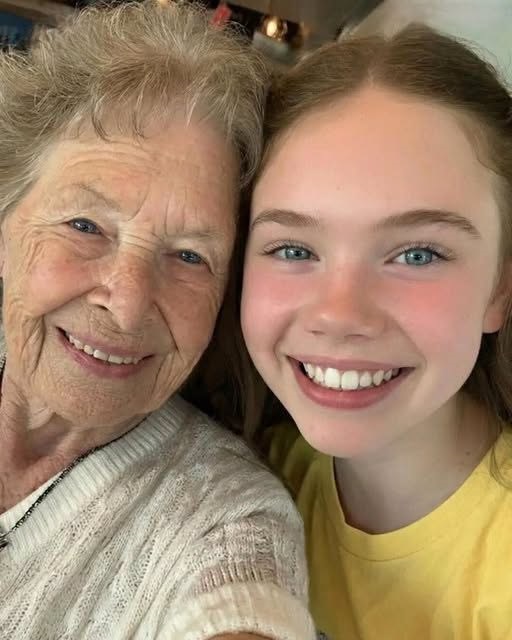
I was thirty-two years old when I discovered that I had never really been an orphan.
By then, I believed I had already buried the three people who had defined my life—my mother, my father, and finally my grandmother.
At least, that’s what I had believed.
Everything changed three days after my grandmother’s funeral.
The letter arrived on an ordinary afternoon.
I was sitting at the same old kitchen table with its cracked vinyl surface.
Her chair was still pushed beneath it, a faded cardigan hanging over the back, one sleeve slipping lower as though it no longer had the strength to stay in place.
The house still carried her familiar scent of cinnamon and old wood, quietly holding on to memories of the woman who had filled every room with warmth.
Without thinking, I filled the kettle and placed two mugs on the counter.
Only after reaching for the second teabag did I realize what I had done.
I froze.
Slowly, I looked at the empty mug.
She wasn’t coming back.
The envelope rested on the table.
My name was written across the front in her unmistakable handwriting.
I stared at it for a long moment.
“No,” I whispered.
“Absolutely not.”
Instead of opening it immediately, I made a cup of tea I didn’t even want.
That’s what she would have done.
Tea first.
Everything else later.
Finally, I opened the envelope.
The moment I recognized her handwriting, every carefully buried memory came rushing back.
Suddenly…
I was six years old again.
My sweet girl,
If you’re reading this, my stubborn old heart has finally decided it’s had enough.
I’m sorry for leaving you alone again.
Again?
I frowned.
That single word felt strangely out of place.
Still, I kept reading.
Before I tell you something difficult, I need you to remember one thing.
You were never unwanted.
Not for a single moment of your life.
The kettle whistled.
I poured the hot water into my mug, returned to the table, and continued reading.
My thoughts drifted back to the day everything changed.
It had been raining.
Adults surrounded me, speaking in careful whispers they thought I couldn’t understand.
A social worker knelt beside me.
“There was a terrible car accident,” she said softly.
“It happened very quickly.”
“They didn’t suffer.”
I remember staring at a stain in the carpet instead of looking into her eyes.
Then my grandmother walked into the room.
Her gray hair was tied tightly into a neat bun.
She wore the same brown coat that always smelled like fresh laundry and cool autumn air.
She knelt until we were eye level.
“Hey, bug,” she said with a gentle smile.
“Are you ready to come home with me?”
“Where’s home?” I asked quietly.
She reached out and held my hand.
“Wherever we’re together.”
“That’s home.”
That first evening, she made pancakes for dinner.
“Pancakes are emergency food,” she announced while flipping one that landed looking more like a strange cloud than breakfast.
“And this definitely counts as an emergency.”
Despite everything…
I laughed.
For just a moment, the sadness became lighter.
That was how our new life began.
Life with my grandmother wasn’t glamorous.
It was simple.
Busy.
Filled with quiet sacrifices I didn’t fully understand until years later.
She worked mornings at the neighborhood laundromat.
In the evenings, she cleaned office buildings.
On weekends, she sat at the kitchen table hemming jeans while I finished my homework nearby.
The elbows of her cardigans became shiny with wear.
The soles of her shoes stayed together with more duct tape than rubber.
Every grocery trip involved comparing prices and quietly putting things back on the shelf.
But somehow…
My school field trips were always paid for.
Every birthday came with a homemade cake decorated with my name.
There was always money tucked inside an envelope for picture day.
Every September brought brand-new notebooks and freshly sharpened pencils waiting on my desk.
At church, people often smiled at us.
“You two are just like mother and daughter.”
My grandmother would simply smile.
“She’s my girl.”
“That’s all anyone needs to know.”
We built little traditions together.
Sunday afternoons always meant tea with far too much sugar.
Card games where she mysteriously forgot the rules whenever I started losing.
Weekly trips to the library, where she pretended to browse novels for herself before somehow ending up beside me in the children’s section.
Every night she read stories aloud, long after I was old enough to read them myself.
Sometimes she’d fall asleep in the middle of a chapter.
I’d gently remove the book from her hands, mark the page, and pull a blanket over her shoulders.
“Looks like we’ve switched jobs,” I’d whisper.
Without opening her eyes, she’d smile.
“Don’t get too clever.”
Our life wasn’t perfect.
But it belonged to us.
Then I turned fifteen.
And suddenly…
That no longer felt like enough.
Everything changed because of a school parking lot.
Cars became symbols.
The students who drove expensive vehicles seemed to belong to a completely different world.
I was one of the few still riding the school bus.
One afternoon, my friend Emma shrugged.
“Why don’t you just ask your grandma?”
“My parents helped me buy mine.”
I laughed bitterly.
“My grandma counts every grape before she puts it into the shopping cart.”
“A car isn’t exactly in our budget.”
Still…
The jealousy stayed with me.
Eventually, I gathered the courage to ask anyway.
One evening, she sat at the kitchen table sorting bills into neat little stacks.
Her reading glasses rested low on her nose.
The familiar chipped mug with faded flowers sat beside her.
“I think it’s time I got a car,” I said.
Without looking up, she answered calmly.
“The car can wait.”
“I could get a job.”
“I could help pay for it.”
That made her pause.
“You’ll help someday,” she replied.
“But not like this.”
“How long am I supposed to wait?” I snapped.
“Until I’m the only senior still riding the bus?”
She folded another bill and looked at me.
“You’re not the only one.”
“And honestly…”
“The bus is safer than half the teenagers driving those cars.”
“That’s not the point!”
“You don’t understand.”
A sadness crossed her face.
“I understand more than you think.”
“If you understood,” I fired back, “you’d help me.”
“You never spend money on anything.”
“You’re just… cheap.”
The moment the word left my mouth…
I wished I could take it back.
She looked at me quietly.
“That’s enough for tonight.”
Her voice wasn’t angry.
It was hurt.
Deeply hurt.
“We’ll talk when you’re ready to stop using words that wound people.”
I pushed my chair back so hard it scraped across the floor.
“Don’t worry,” I said.
“I’ll never ask you for anything again.”
I slammed my bedroom door behind me.
That night, I cried into my pillow while rehearsing all the apologies I planned to say the next morning.
I never got the chance.